

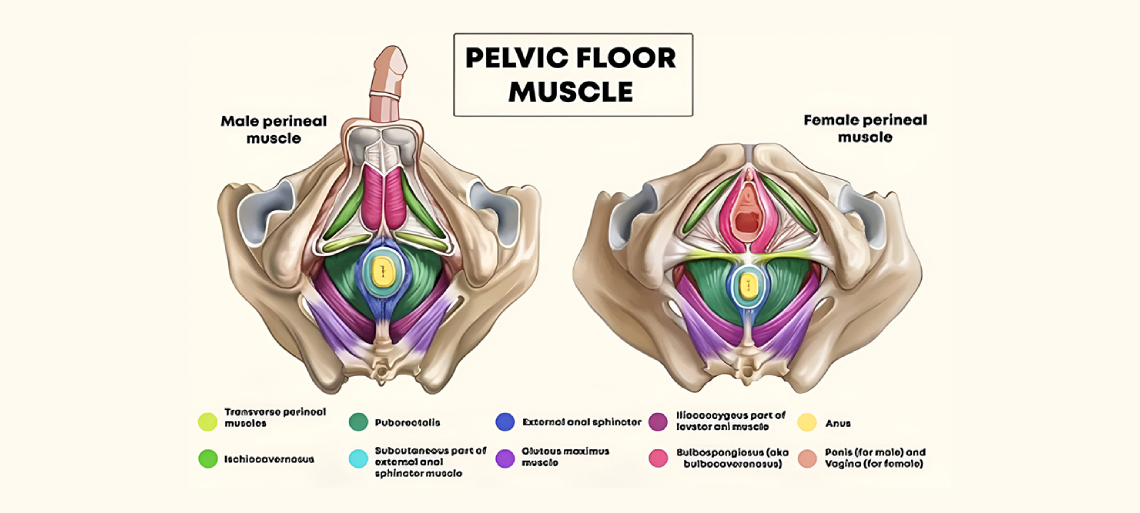
Pelvic Floor Muscles: The Silent Powerhouse of Your Body
When we think about strength and health, we usually picture toned arms, strong legs, or a healthy heart. But deep within your body lies a silent powerhouse that plays a crucial role in everyday comfort, confidence, and wellbeing — the pelvic floor muscles.
They work quietly, constantly, and without recognition. Yet when they weaken, the effects can be life-changing, impacting bladder control, posture, intimacy, and overall quality of life — for both women and men.
What Are Pelvic Floor Muscles?
The pelvic floor is a group of muscles and connective tissues that form a supportive base at the bottom of the pelvis. Often described as a hammock or sling, these muscles hold and support vital organs, including:
- The bladder
- The bowel
- The uterus (in women)
- The prostate (in men)
They are essential for:
- Bladder and bowel control
- Core and spinal stability
- Posture and coordinated movement
- Sexual function and performance
When the pelvic floor is strong, these processes happen effortlessly. When it weakens, problems begin to surface — often gradually and silently.
Why Pelvic Floor Health Is So Important
The pelvic floor is a critical part of your core system, working together with abdominal and back muscles to stabilize the spine and pelvis.
Strong pelvic floor muscles help to:
- Prevent urinary and bowel leakage
- Reduce pelvic and lower back pain
- Improve posture, balance, and movement
- Enhance sexual sensation and performance
- Support confidence and emotional wellbeing
Weakness in this area doesn’t affect just one function — it can disrupt the entire core system.
What Happens When Pelvic Floor Muscles Become Weak?
Clinical research shows that pelvic floor weakness can lead to:
- Urinary incontinence (leakage during coughing, sneezing, or exercise)
- Pelvic heaviness or pressure
- Chronic lower back pain
- Reduced core strength
- Sexual dysfunction and reduced satisfaction
- Erectile dysfunction and ejaculatory control issues in men
Many people believe these symptoms are a “normal part of aging” or childbirth — but medical evidence confirms they are treatable conditions.
How Common Is Pelvic Floor Dysfunction?
Pelvic floor dysfunction is far more common than most people realize:
- Up to 1 in 3 women experience pelvic floor dysfunction during their lifetime
- Approximately 20–25% of men develop pelvic floor-related symptoms, particularly with aging or after prostate surgery
Risk increases with:
- Pregnancy and childbirth
- Menopause
- Obesity
- Chronic coughing
- Heavy lifting
- Prolonged sitting
- Neurological conditions
Despite its prevalence, pelvic floor dysfunction often remains undiagnosed due to embarrassment and lack of awareness.
How Pelvic Floor Weakness Affects Women
In women, weakened pelvic floor muscles are commonly linked to:
- Postpartum recovery challenges
- Stress urinary incontinence
- Pelvic organ prolapse
- Reduced sexual sensation
- Menopausal pelvic changes
Hormonal shifts and childbirth place significant strain on these muscles, making targeted strengthening essential for long-term pelvic health.
How Pelvic Floor Weakness Affects Men
Men are equally affected — though less likely to seek help.
Pelvic floor weakness in men can contribute to:
- Urinary leakage
- Erectile dysfunction
- Reduced erection firmness and endurance
- Post-prostate surgery complications
- Decreased sexual confidence
Medical studies confirm that strengthening pelvic floor muscles significantly improves erectile function and urinary control.
The Science Behind the EMS Pelvic Chair
The EMS Pelvic Chair uses High-Intensity Focused Electromagnetic (HIFEM) technology to stimulate deep pelvic floor muscles.
Clinical studies published in journals such as Neurourology and Urodynamics show that electromagnetic stimulation:
- Produces thousands of supramaximal muscle contractions per session
- Activates muscles that are difficult to engage through voluntary exercises
- Enhances neuromuscular control and muscle strength
Why the EMS Pelvic Chair Is an Effective Solution
- Non-invasive and pain-free
- No undressing or physical contact
- No downtime or recovery period
- Suitable for both women and men
A typical treatment plan involves 6–8 sessions, with many patients reporting:
- Improved bladder control
- Stronger core stability
- Reduced pelvic and lower back pain
- Enhanced sexual performance and confidence
Strengthening the Foundation of Your Health
Pelvic floor health is not a luxury — it is a fundamental part of overall wellbeing.
Ignoring weakness can lead to long-term complications, while early intervention can restore comfort, confidence, and control.
With modern, evidence-based solutions like the EMS Pelvic Chair, strengthening your pelvic floor has never been easier, safer, or more discreet.
Book your consultation today and take a proactive step toward lasting pelvic health.
Trusted Medical References
- International Continence Society (ICS)
- International Urogynecology Journal
- Neurourology and Urodynamics
- National Institutes of Health (NIH)
- European Association of Urology (EAU)